Thursday, May 2, 2013

World War II Political Cartoons

View these World War II political cartoons and prepare to discuss them in class. 


Tuesday, April 23, 2013

Hitler: The Great Orator


Hitler: The Great Orator
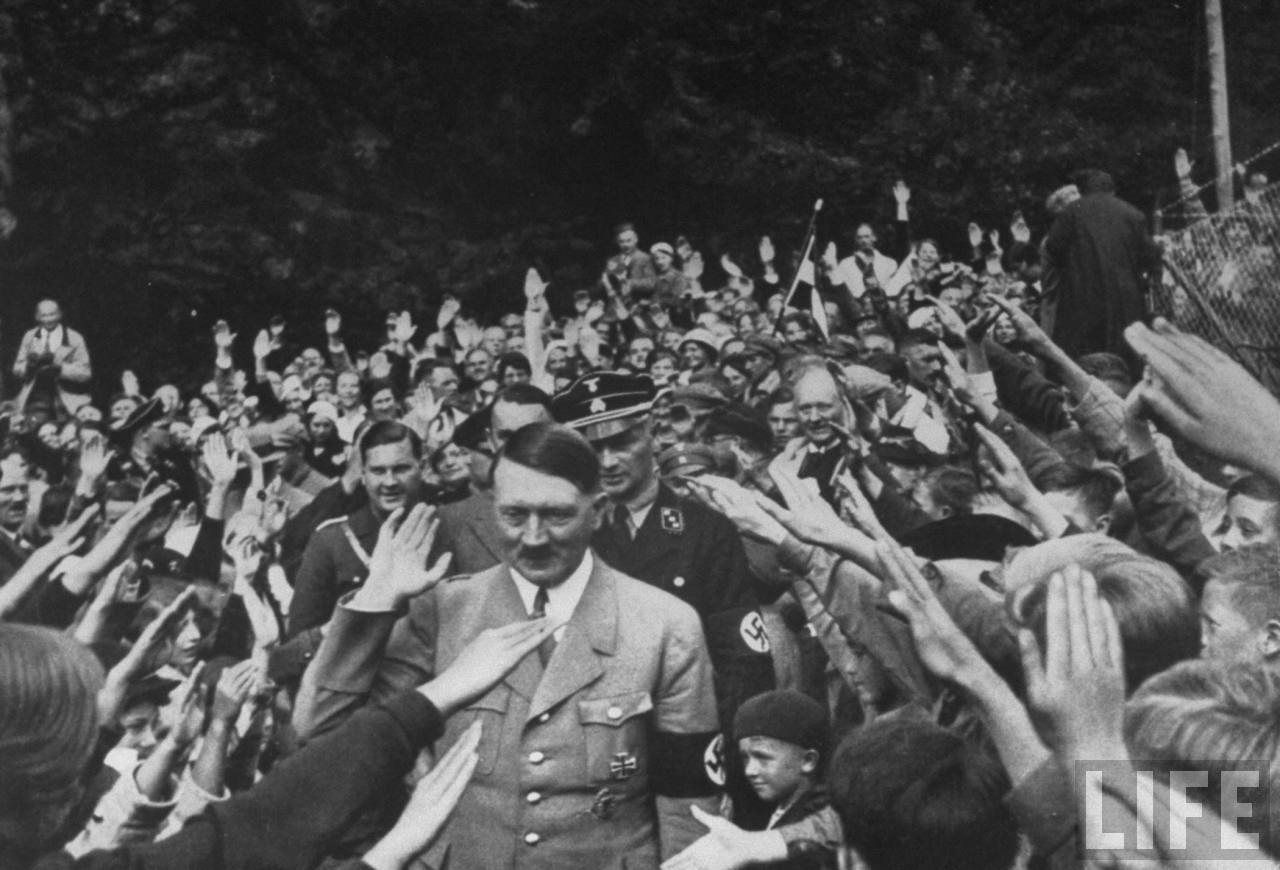
Adolf Hitler has been referred to as a great orator, or speaker.  It has been said that even if one does not understand what he is saying, from his emotions, tone, and body language one can understand how he was able to persuade people to follow him.  Yet still, others say, it was clear from his speeches that he was a fanatic.  Here is your chance to tell your story…
Instructions:
Imagine you are a German reporter who is covering an event for a newspaper/magazine where Hitler is going to be giving a speech.  This is the first time you have seen Hitler speak in person.  Using the series of pictures above, write what you see and hear at this event.  Use what is happening in the pictures to help describe what is happening at the event.  Make sure to include the following in your article:
 
·         Put the name of your “newspaper/magazine” across the top.  For instance:“The German Gazette”
·         Make up a German name and use it as the author of the article.  Make sure to add a “/” and your real name.  For example:  Heinrich Eichel/John Smith
·         Describe the pictures at some point during your story.
·         Explain what these pictures tell you about Hitler as a speaker.  For instance, was he boring? Emotional?
·         What do these pictures tell you about how the Germans felt about Hitler?
·         What is Hitler talking about in his speech?  How does it make you feel?
·         Write this story in the first person and stay in character.  Remember, you are a REPORTER.
·         Include information we have learned and discussed in class to make your story more realistic and accurate.
This is due April 30, 2013
This will count as a “Project” grade and is worth 100 POINTS.
Picture 1
Picture 2


Picture 3


Thursday, April 4, 2013

Great Depression Essays

In the History Channel video regarding the Dust Bowl, it was said that many people grew old quickly and before their time. What do you think was meant by this? This can mean they grew old physically, emotionally, or mentally. Use at least 3 details from your notes to support your answer. Be descriptive and detailed. THIS IS AN ESSAY, NOT A PARAGRAPH!!! Must be typed, size 12, Times New Roman font, and double spaced.

OR

“Why was it called the Great Depression?”
Why do you think this era in US history was called the Great Depression? Does this term just refer to the financial state of the United States? Explain your answer. Give at least three reasons to support your answer. Use all of the information we have discussed in class (social, economic, environmental reasons) to support your answer. THIS IS AN ESSAY, NOT A PARAGRAPH!!! Must be typed, size 12, Times New Roman font, and double spaced.
BOTH ESSAYS ARE DUE WEDNSDAY, APRIL 10, 2013
You are only required to complete one of the essays.  Choose your topic.
 

Thursday, March 21, 2013

Spring Break Mini-Project: Great Depression Poetry

In Language Arts you have discussed poetry and in Social Studies you have been studying the Great Depression.  Time to use your knowledge in all of both subjects and create a poem!

 Instructions:
You are to write a poem about the Great Depression Era.  This will require you to use the skills and information you have learned in both Mrs. Parker’s and Mrs. Yancie’s classes.  Imagine you are a person living in the Great Depression Era (1929-1939).  Write a poem describing your life, your experiences, what it is like to live in this era and how you feel about your experiences during the Great Depression.  BE CREATIVE!!!  Choose from the following topics:


·        Stock Market Crash/Black Tuesday
      ·        Bank Failures
      ·        Return of Child Labor
      ·        Dust Bowl
      ·        Hoovervilles

 You must have the following in order to receive full credit:
       ·        Must be TYPED; the font and size is up to you
       ·        DO NOT just put this on a plain sheet of white paper!  You can use card stock,
             construction paper, poster board, be creative and original!
      ·        Must be decorated; it CAN NOT be just a poem.  Again, use your imagination!
      ·        Must be at least three (3) stanzas
      ·        Must be historically accurate and relevant
      ·        Must be written in the FIRST person point of view

 Mrs. Parker will give a grade for Language Arts and Mrs. Yancie will give you a grade for Social Studies.  You will be graded on the following:

Mrs. Yancie
·        Historical relevancy/accuracy
·        Historical content
·        Historical concepts
·        Originality/Creativity of Poem
 
Mrs. Parker
     · Grammar
     · Spelling
     · Poem construction
     · Originality/Creativity of Poem
   

                                         This project is due April 3, 2013
                                      This will be worth 125 Project points.


Tuesday, March 12, 2013

America the Story of Us: "The Boom" (6A, 6C, 6D)

Choose one of the questions between questions 1-3. EVERYONE is responsible for answering question number 4. You should be turning in two essays on March 19th. These will count as two separate TEST grades.

1. Henry Ford was a “game changer” in the car industry. His contribution did not just affect the car industry, but those who worked in it, the average person, and America. Explain how he changed the way cars were owned and how they were made. Give at least two reasons EACH, with examples. Also, describe how you see the effects of his contribution today. Give at least two reasons to support your answer.


2. California was changed forever by a form of technology called the aqueduct. Why did California need this type of technology so badly? Give examples. What was the solution and how did this solution affect southern California and Owens Valley? Give at least three details in your explanation. Do you think this solution was worth the price that was paid? Give at least two reasons to support your answer.


3. Prohibition was the United States’ resolution to the alcohol problem. What was the religious and moral argument for Prohibition? Give at least two reasons to support your answer. Do you think Prohibition was the answer to the United States’ social problems? Give at least three reasons to support your answer.


4. “If you want something great, you may have to give up something great to get there”. Explain what you believe this quote means. Other than what happened with Owens Valley, describe another event in history where this quote seems to have been applied. Be descriptive and specific. Do you agree with this quote? Give at least two reasons to support your answer.


DUE TUESDAY, MARCH 19TH

MUST BE:

Typed, Double Spaced, size 12 font, Times New Roman


Friday, March 1, 2013

Langston Hughes: "Let America Be America Again"

6D, 6A: Due Monday, March 4th   
6C: Due Wednesday, March 6th

Instructions: Read and analyze the poem “Let America Be America Again” by Langston Hughes. Summarize the poem in one paragraph (at least 7-8 GOOD sentences). Select 5 lines from the poem that support your summary. Explain each line you select and EXPLAIN how it supports your summary.

MUST BE:

Typed, Double Space, Size 12, Times New Roman Font

Due Wednesday, March 6, 2013
THIS IS A TEST GRADE


Thursday, February 14, 2013

World War I Test: Notes for Your Foldable!!!

Allied Powers:  1. Great Britain/England  2.  France  3.  Russia  4.  Italy   5. United States
Central Powers:  1. Austria-Hungary  2.  Germany

Causes:
1.  Nationalism
2.  Industrialization
3.  Imperialism
4.  Military Build-up/Militarism
5.  Alliances
6.  Powder Keg in the Balkins/Tension in the Balkins

Effects:
1.  Assassination of Archduke Ferdinand
2.  All countries were brought into the war
3.  Arms race- see who can build better and bigger weapons
4.  Asia/Africa/other continents were claimed by other powers

Instructions for mini-essays underneath the "flaps" of your foldables:

1.  Underneath "WWI Alliances" flap answer the following:
How did alliances cause a "world war"?  Use examples.

2.  Underneath "Causes/Effects" flap answer the following:
How did the causes and effects of World War I make this war the deadliest war to this point in history?